
Zola: Monetizing the Vendor Marketplace
Launching a New Revenue Stream for Zola
Once the Vendor Marketplace began to prove valuable to both couples and vendors (80% of inquiries resulted in a vendors connecting with the couple, which proved vendors believed those were high quality leads), we had to opportunity to create opportunities for profit–even before launching the booking process on our platform–by monetizing on those connections.
My Role
As the Senior Director of Product Design, I directly managed a Design Lead for this project.
Daily partner to the Product Director, Engineering Lead and GM to create the monetization strategy, product principles, and define ecosystem between vendors, our admin system, vendor success tools, payments and checkout flows. Collaborate with the Business to conduct qualitative and quantitative vendor research, business model concepting, and the credit system research, design and rollout plan. I also worked with Creative to produce vendor-facing videos and other marketing materials.
Stakeholder management: CEO, President, and Chief Design Officer.
Creating a Differentiated Model to Monetize the Couple/Vendor Connection
Unlike other competitors that charge a standard subscription fee, independent of the quality or quantity of leads, Zola monetizes solely on the number of vendor connections, which means vendors are in control of which inquiries they choose to connect and pay for. Also unlike other competitors, we decided to go with a credit-based, multi-package solution.
We offered a free product (our MVP) for one year to learn and iterate on our product, and teed up vendors to expect our product to be monetized once it proved valuable.
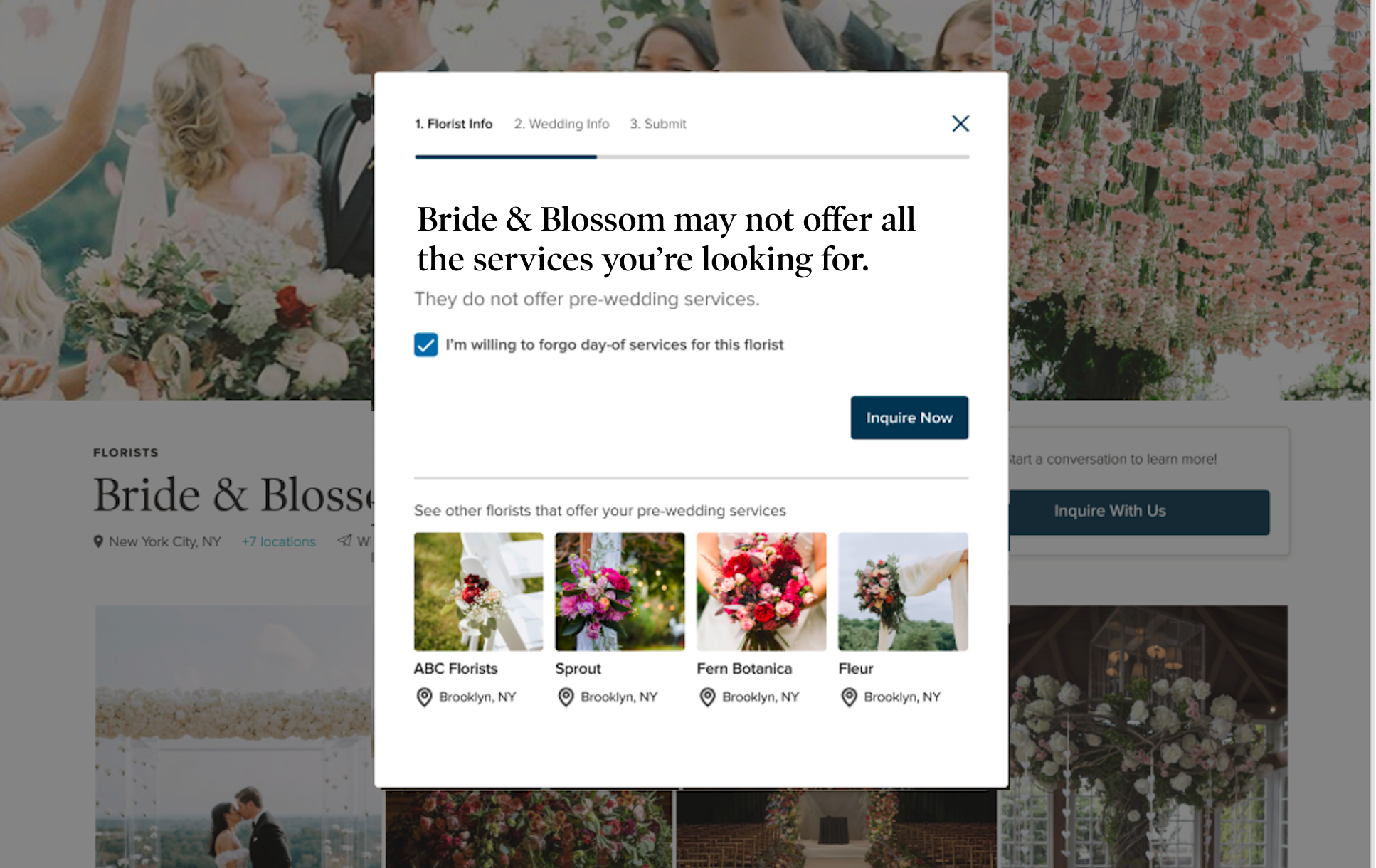
For couples, we deliver a self-qualifying inquiry process that educates them as they inquire, so they can adjust their preferences and confirm if they are a fit with the vendor they are inquiring with.
If they are not a high quality lead, we recommend other vendors that fit those preferences– thus transforming nearly all couples into highly qualified leads.
Challenges to Rolling Out Stages of Monetization for an Existing Free Product
Rapid vendor onboarding: Our plan consisted of various user stories and avenues of vendor communication, especially since during this project we were onboarding ~5,000 more vendors across 37 cities.
Triggers dependent on vendor profile completion: There were various considerations, such as understanding if the vendor was published on our platform yet, or not. If not, we wanted to keep them focused on finishing that vital step, before triggering to credit package details via CRM, vendor team outreach, marketing and content strategy, and access to different areas of the product.
Different transition plans for different cohorts of vendors:
Existing vendors who have already gotten inquiries and connected with couples
Grant them free credits, communicate the credit currency to redeem leads, product walk-thoughts for their next inquiry
Existing vendors who have never gotten an inquriy
Grant them free credits, delay credit communication until they receive their first inquiry
New vendors who will publish profiles after the model is enabled
Grant them free credits upon publishing their profile, delay credit communication until they receive their first inquiry
Building new infrastructure to allow credit-based monetization and free trial periods: To allow vendors to purchase packages of credits and redeem credits for leads, we built out new infrastructure to enable our credit-based monetization model to vary pricing based off vendor category (ie. venues cost significantly more than a photographer), and to be flexible enough to allow variations in UX and pricing for testing and rollout purposes (ie. can turn on/off by market, allow endowment during the free trial period, etc.)
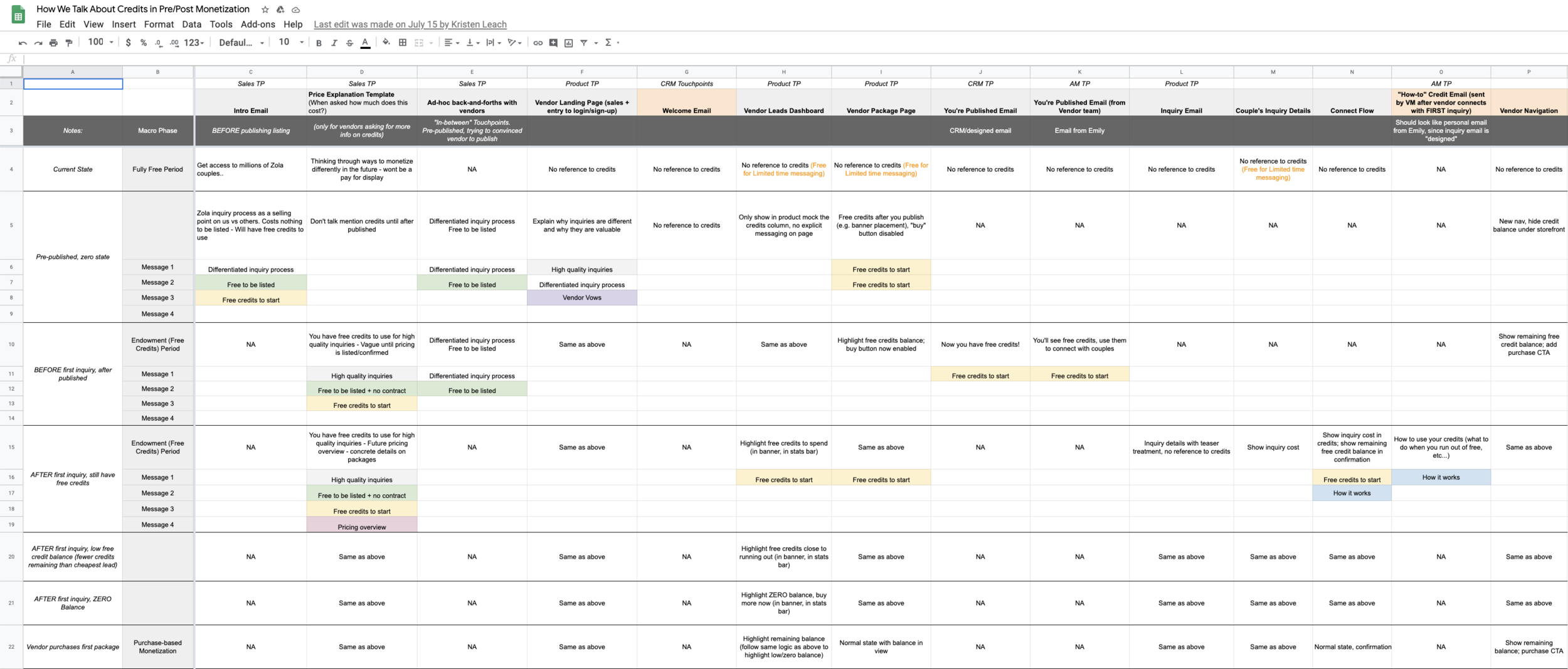
A snapshot of the stages of monetization and vendor communication / UX variations across touch points
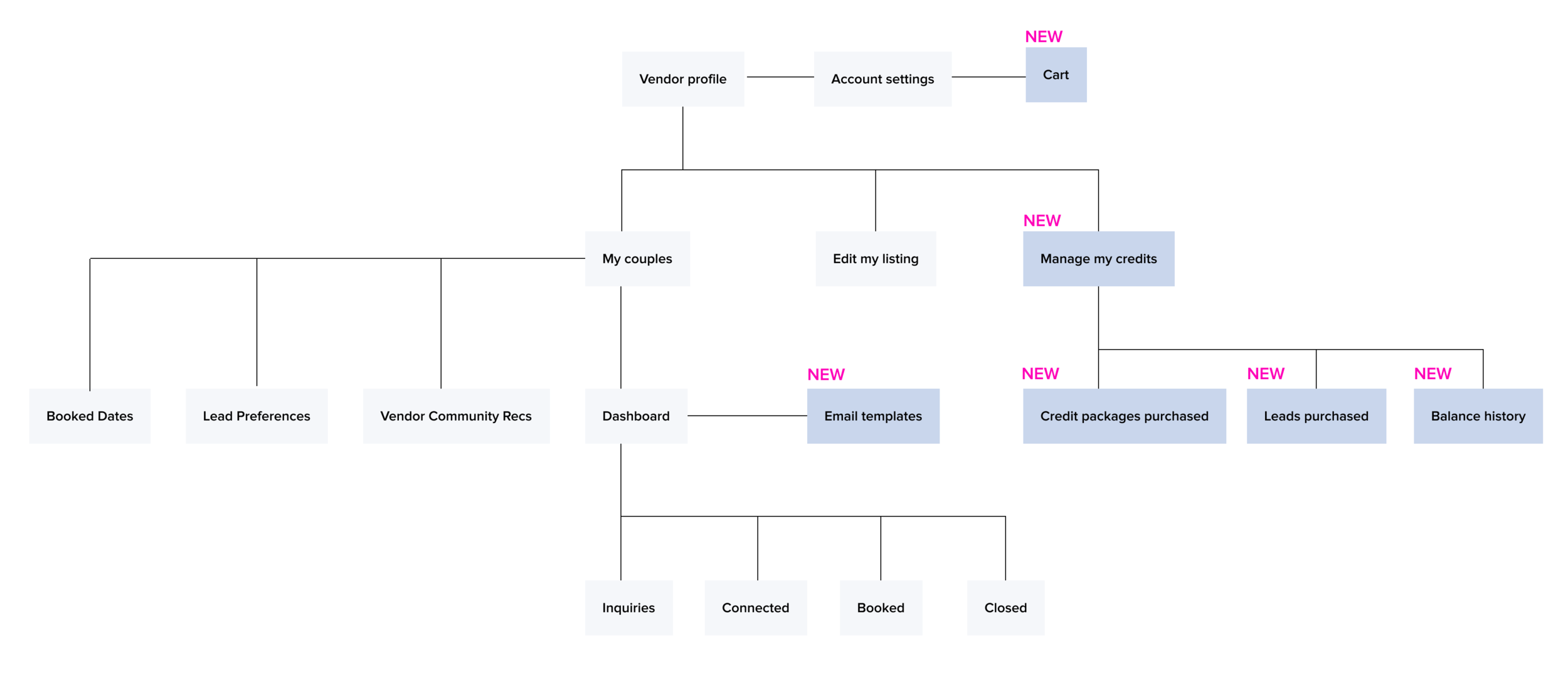
Vendor-facing nav structure additions
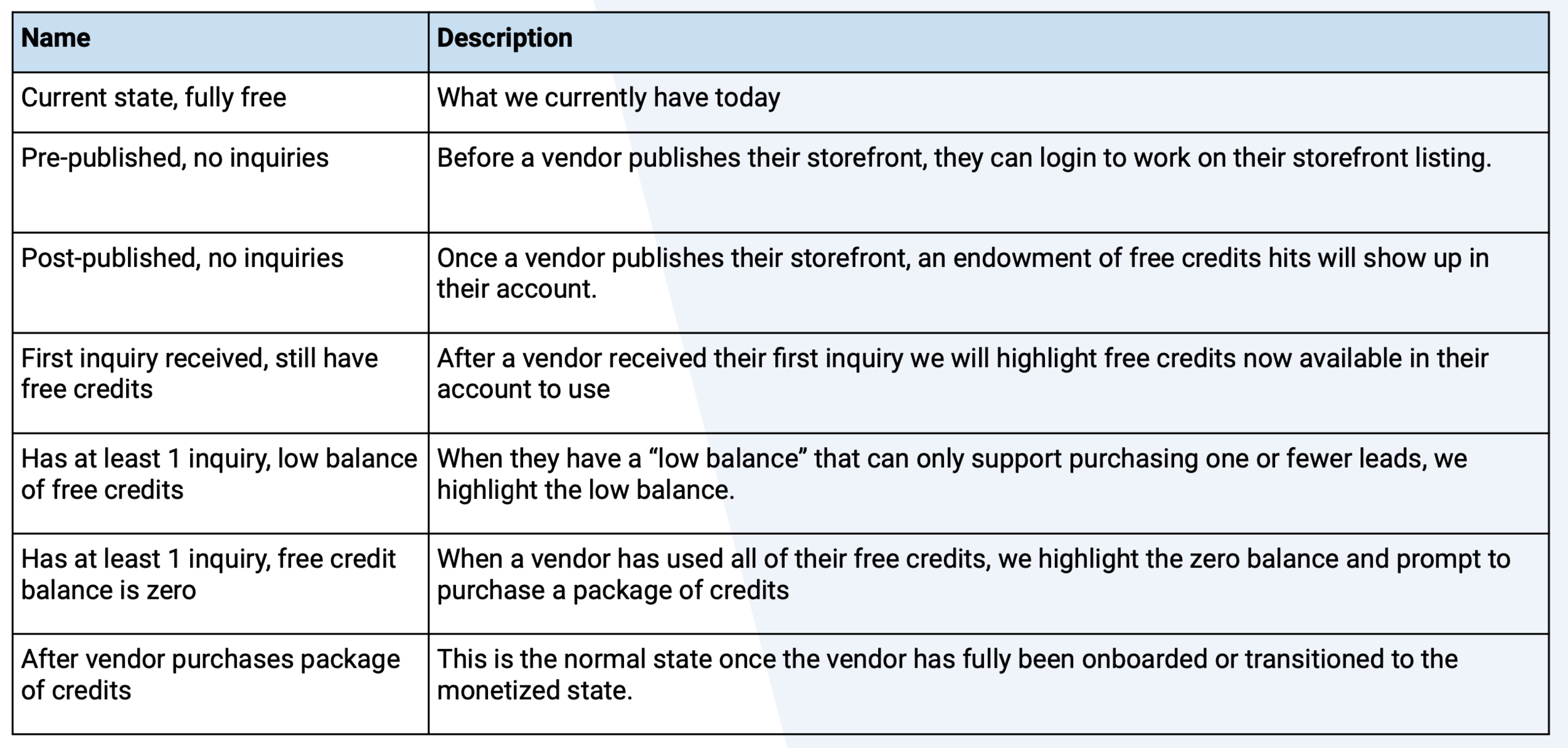
Different vendor states for monetization rollout
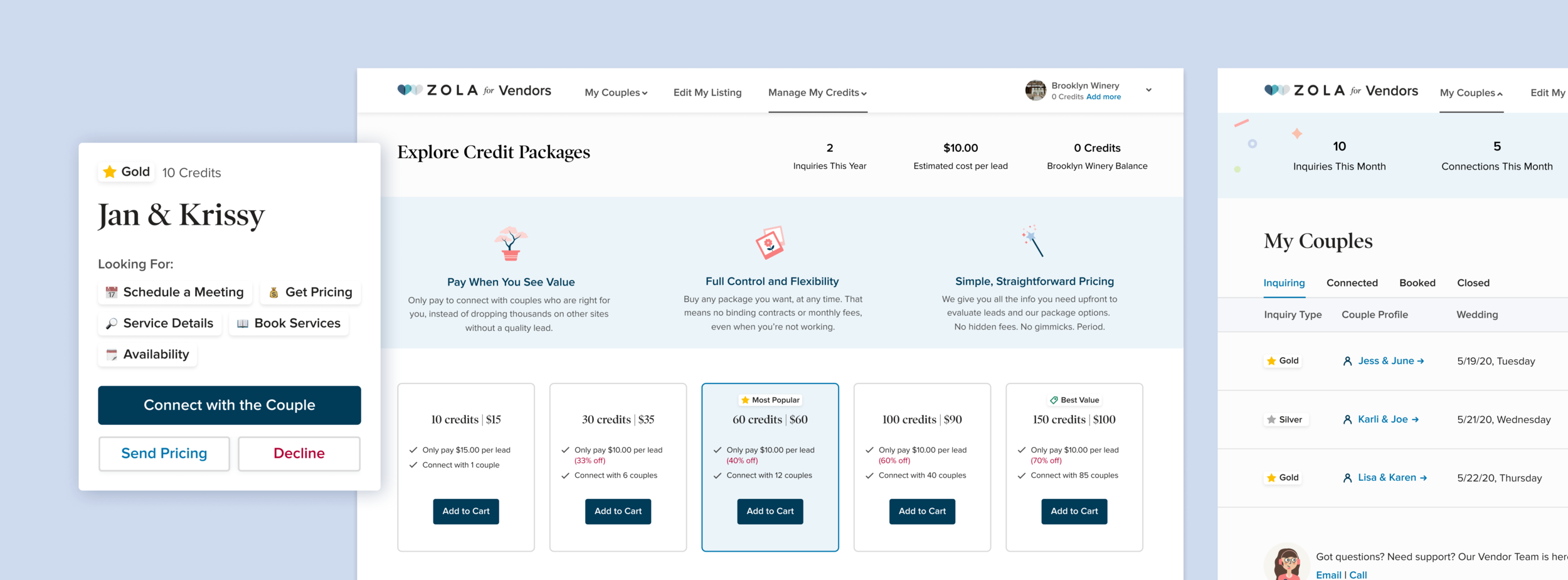
Purchasing Credit Packages
Research showed that vendors wanted a range of packages that allowed them to invest just enough to try the product before returning to purchase a value pack, others wanted to go for the mid-range “most popular” options, and others were looking for best value.
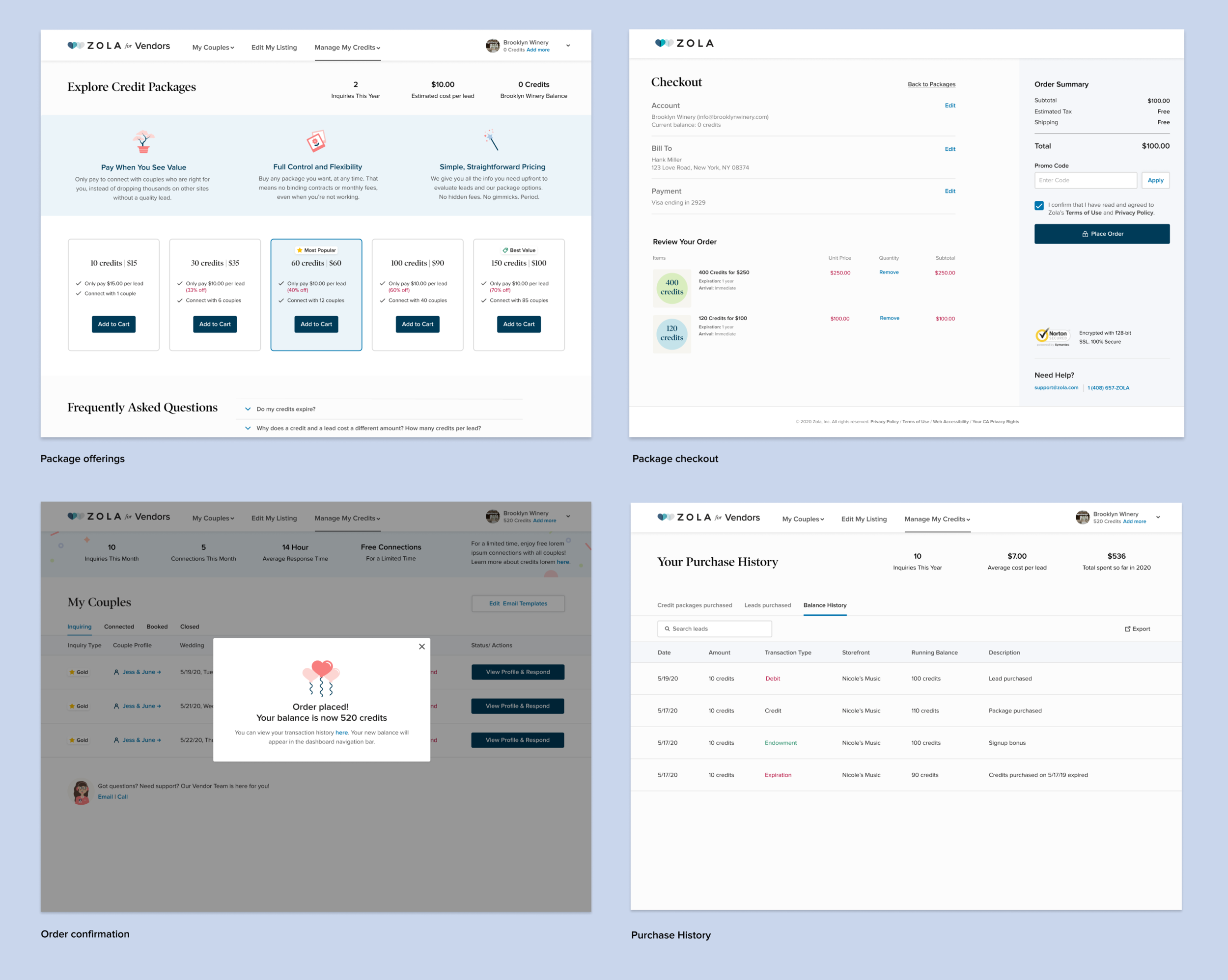
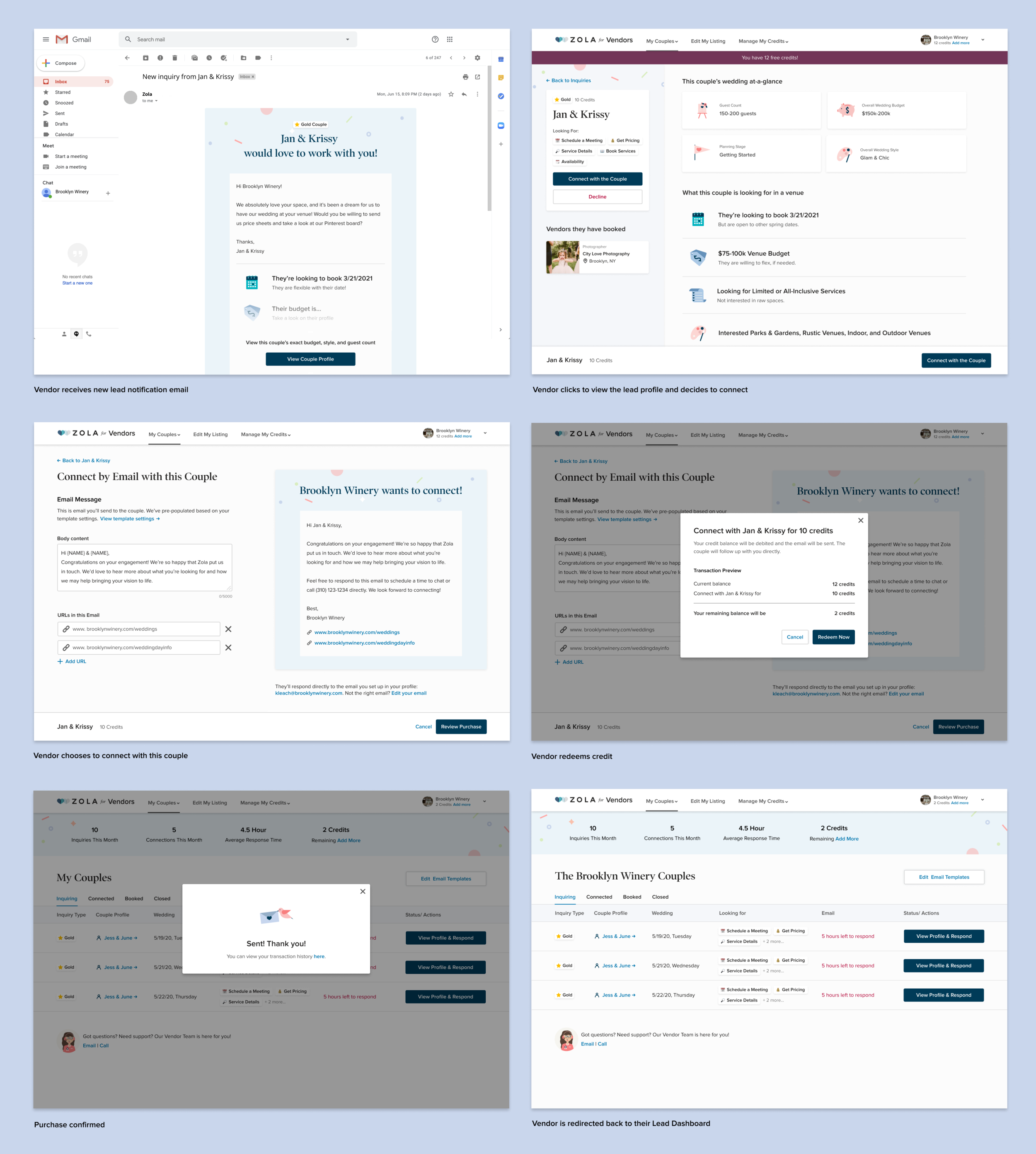
Qualifying Leads & Redeeming Credits to Connect with Couples
Through our new couple’s self-qualifying inquiry process, vendors would receive a new industry-standard amount of information from highly qualified couples, and can decide when and on which lead to redeem credits.
To help vendors sort through leads, couples are pre-ranked by factors such as preferences provided matches the vendor preferences, level of information given, stage of commitment to book a vendor, booking a venue or other vendors within the vendor’s preferred vendor list, and more. If the ranking system proves valuable for vendors, in the future we can have varied pricing structure based on couple rank.
Rollout Plan
Phase 1: Vendors receive free credits and redeem for leads
A quiet launch to get vendors familiar with the mechanism of using credits to purchase leads by granting them free credits that they can redeem for leads.
Test the credits infrastructure
Learn how many free leads a vendor needs to get before they perceive value from Zola, and if these leads are converting to bookings
Implement credits currency so we can leverage it for other incentives
Phase 2: Vendors purchase credit packages
A/B test package options
Our long term goal for the product is to allow couples to complete their entire wedding vendor journey on Zola. For the Vendor Discovery product, that could include communicating with, booking, and managing vendors to handling couple/vendor transaction like deposits, payments, tips, and more.

The Vendor Service Blueprint