
Zola Vendor Marketplace: Optimizing Couples’ Conversion to Inquiry
Background
Zola’s Vendor Marketplace connects couples with wedding vendors that meet their preferences. In 2020, our two-sided marketplace rapidly expanded from just launching NYC to covering ~50% of all national wedding markets by the EOY.
My Role
As the Senior Director of Product design, I was hired to concept, launch, and build out the Vendor Discovery Business Unit. For the Marketplace platform, I directly managed two Product Design Leads and two Senior Product Designers. I managed stakeholder relationships which included the CMO, CEO, President, and CDO.
Objective
Our 2020 Q4 goal for the couples-facing side of the marketplace was to convert couples to inquire – which would directly impact our monetized product on the vendor side.
Challenges & Constraints
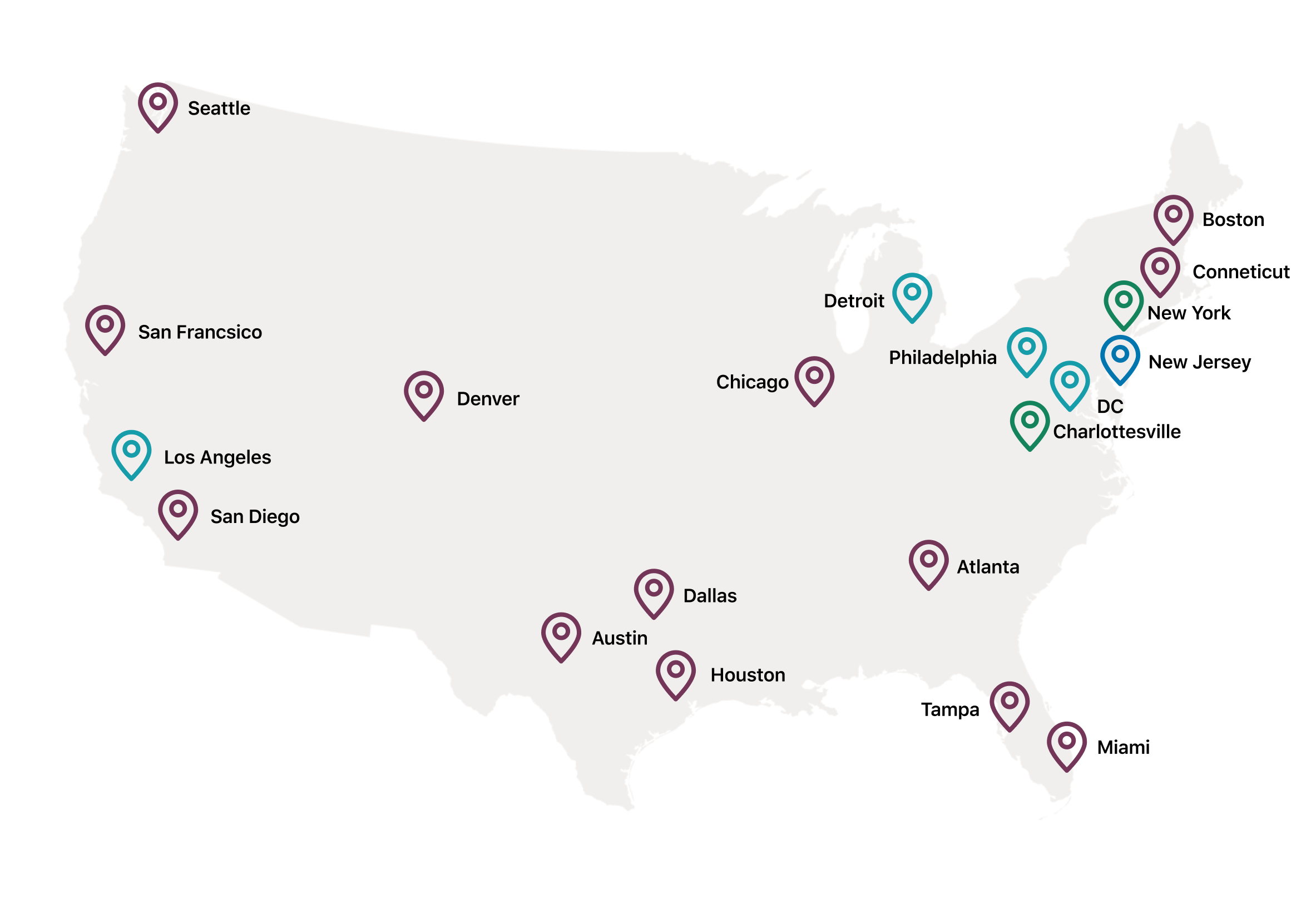
1. Rapid city expansion caused shifting constraints and capabilities
While market expansion and vendor maximization per market was happening, the couple experience had continue to be in lock-step with market constraints.
The volume of vendor supply and breadth of vendor categories per market was constantly in flux, directly influencing the rollout of features such as a global vendor search.
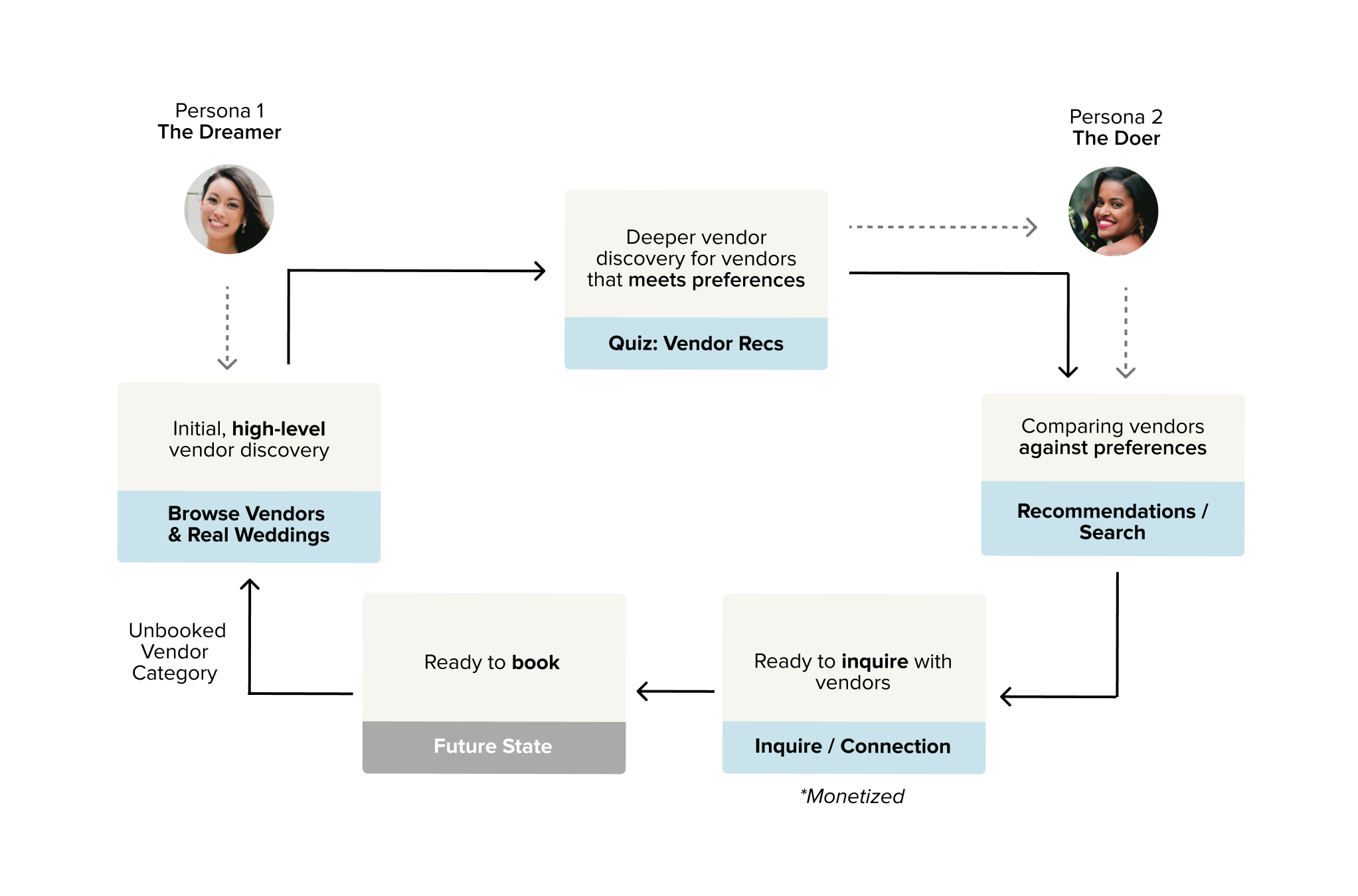
2. Determining the cohort of each couple and their current place in the cyclical journey
Dreamers are early funnel users and may not know their preferences yet. Doers have anchored their location, and are more set in their wedding preferences. The cycle begins again for each user as they explore a new vendor category.
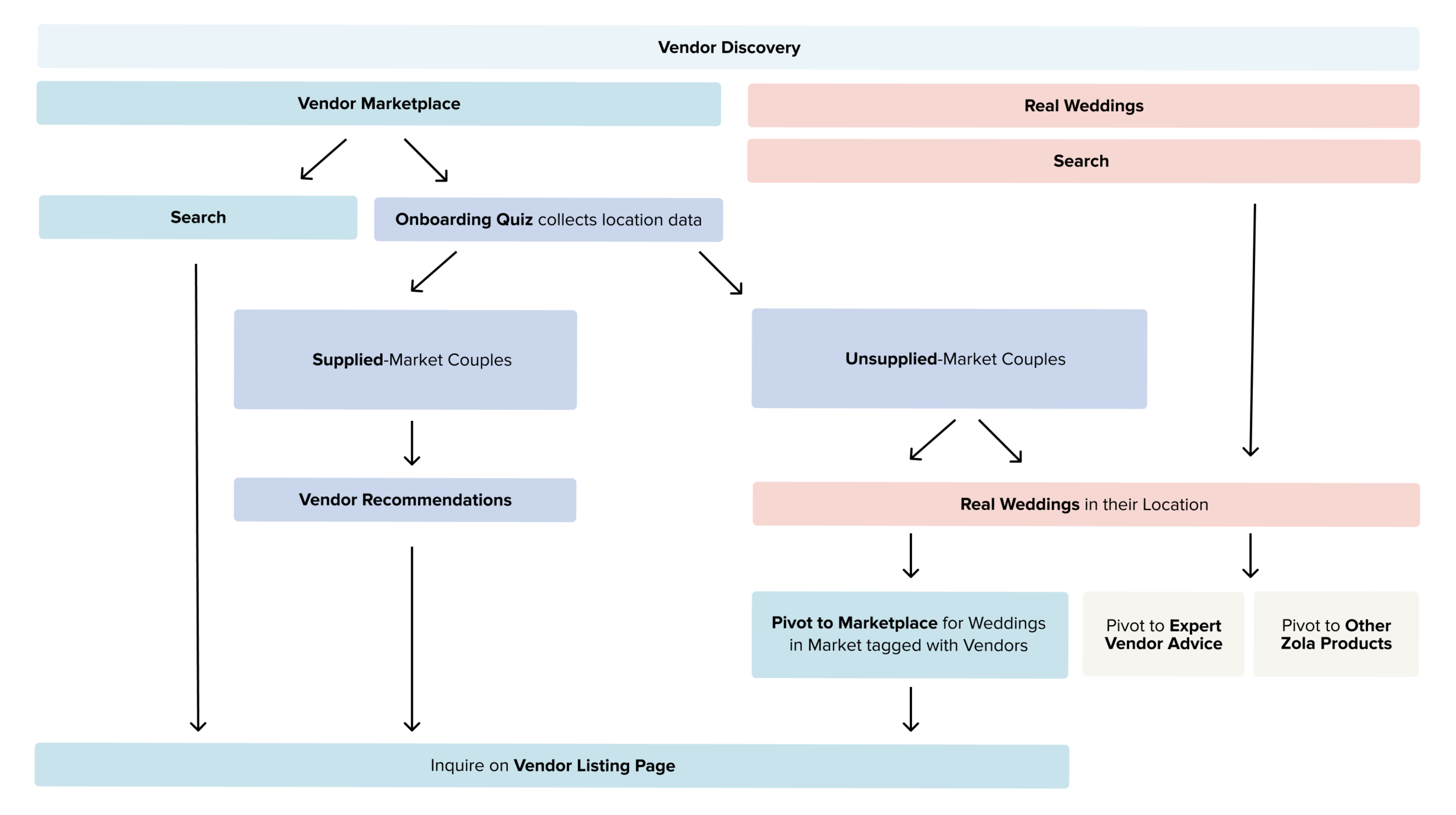
3. Segmenting couples for conversion and providing value to unsupplied market couples
In order to funnel couples into the relevant experience, our goal was to gather wedding location data, explicitly through an onboarding quiz, or implicitly through search.
Given the above constraints, how might we increase couple conversion to inquiry? We decided to run an A/B test of two hypotheses:
↓
Hypothesis 1:
A guided quiz that provides vendor recommendations will increase conversion.
Based on quiz performance on other Zola products and a Beta test with manual matching for our Marketplace, we knew there was an appetitive and value for couples to seek vendor recommendations.
High engagement (60%) with the venues category indicates couples are early in their planning journey and may need guidance. An onboarding quiz that captures location data and helps educate couples to narrow their preferences will increase confidence for couples to inquire.
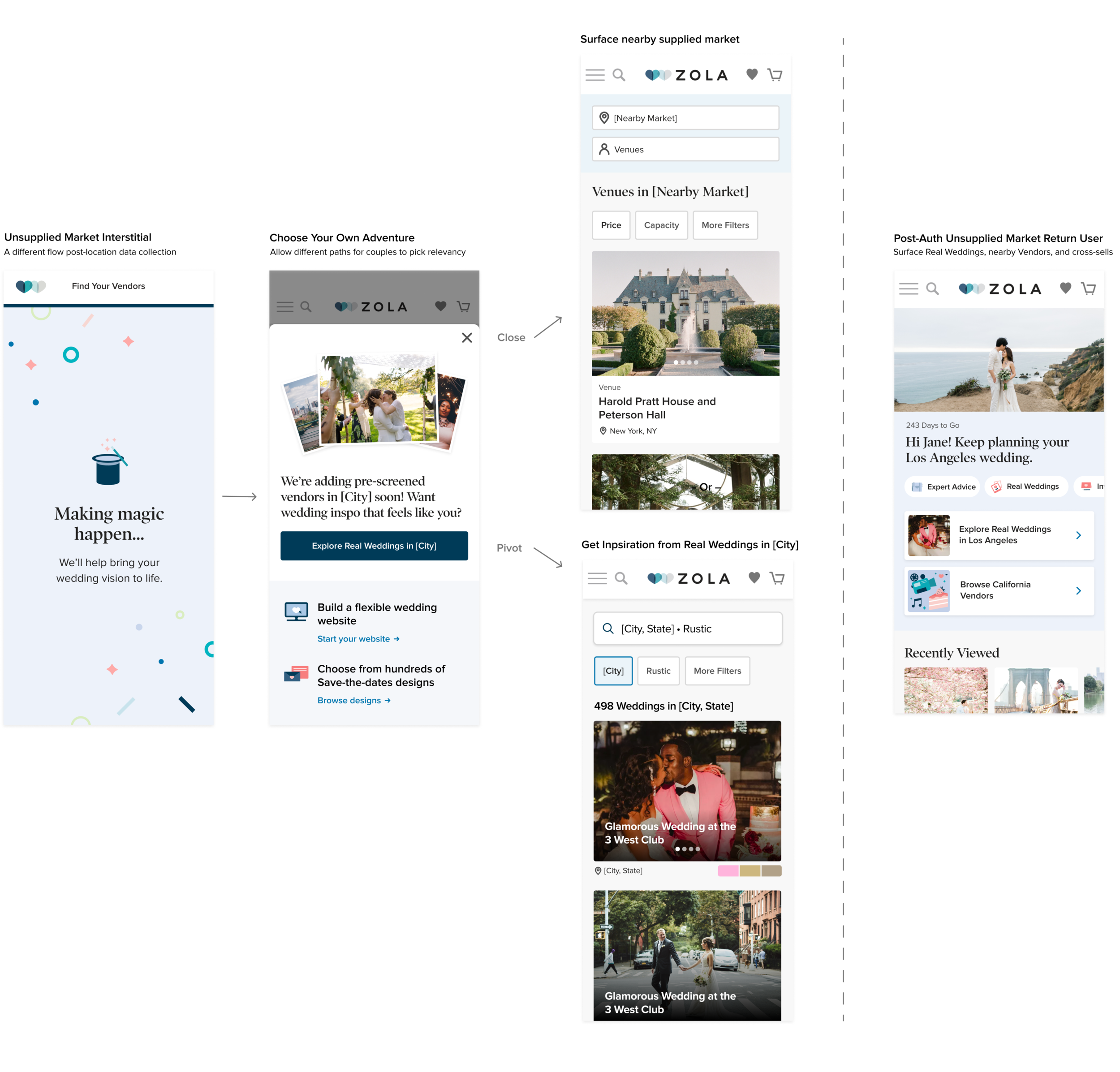
Without enough markets live, releasing a search functionality would mostly lead couples to zero results. A personalized quiz could lead to the acquisition of early funnel couples and provide them with relevant content and cross sells.
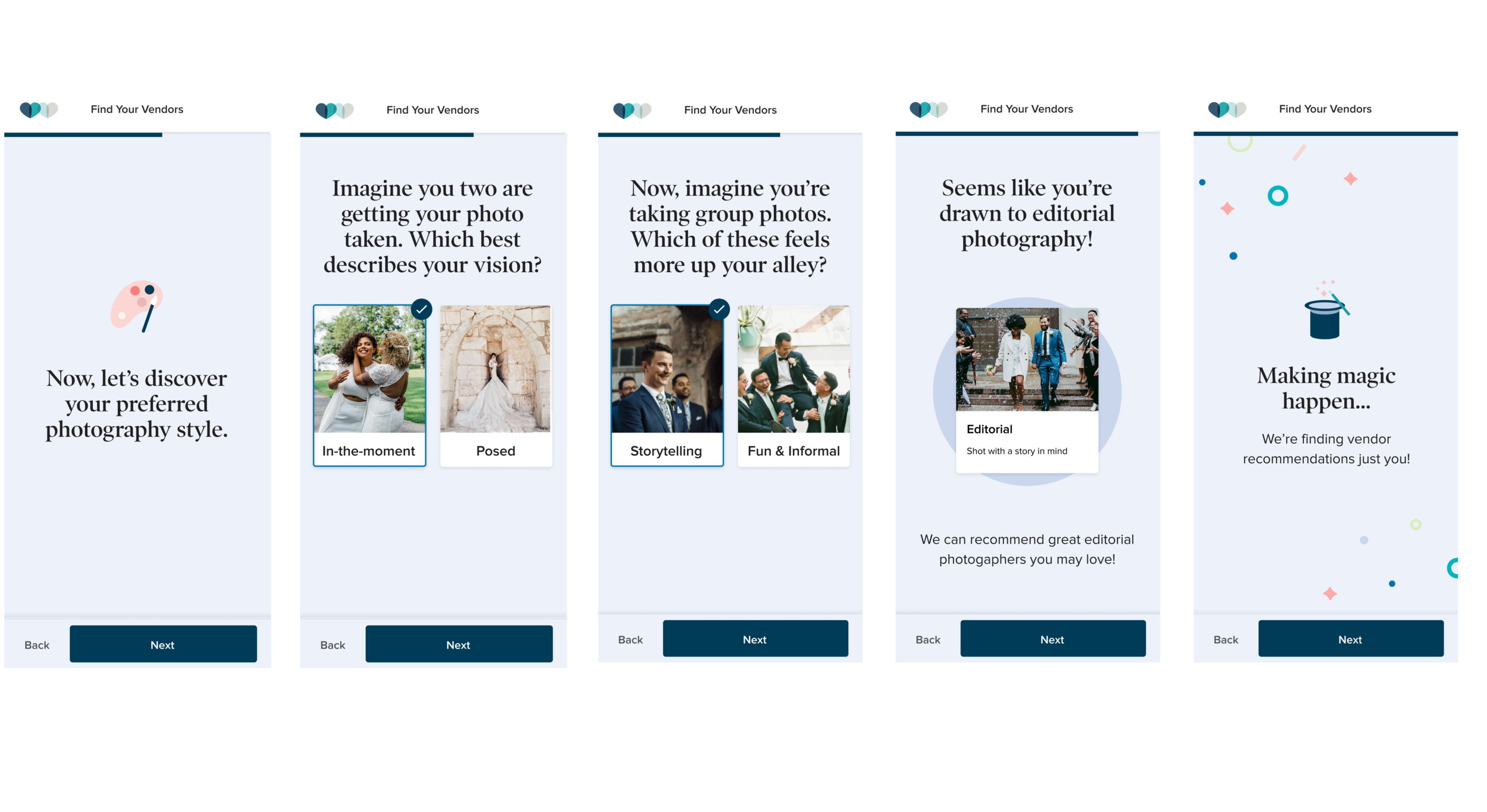
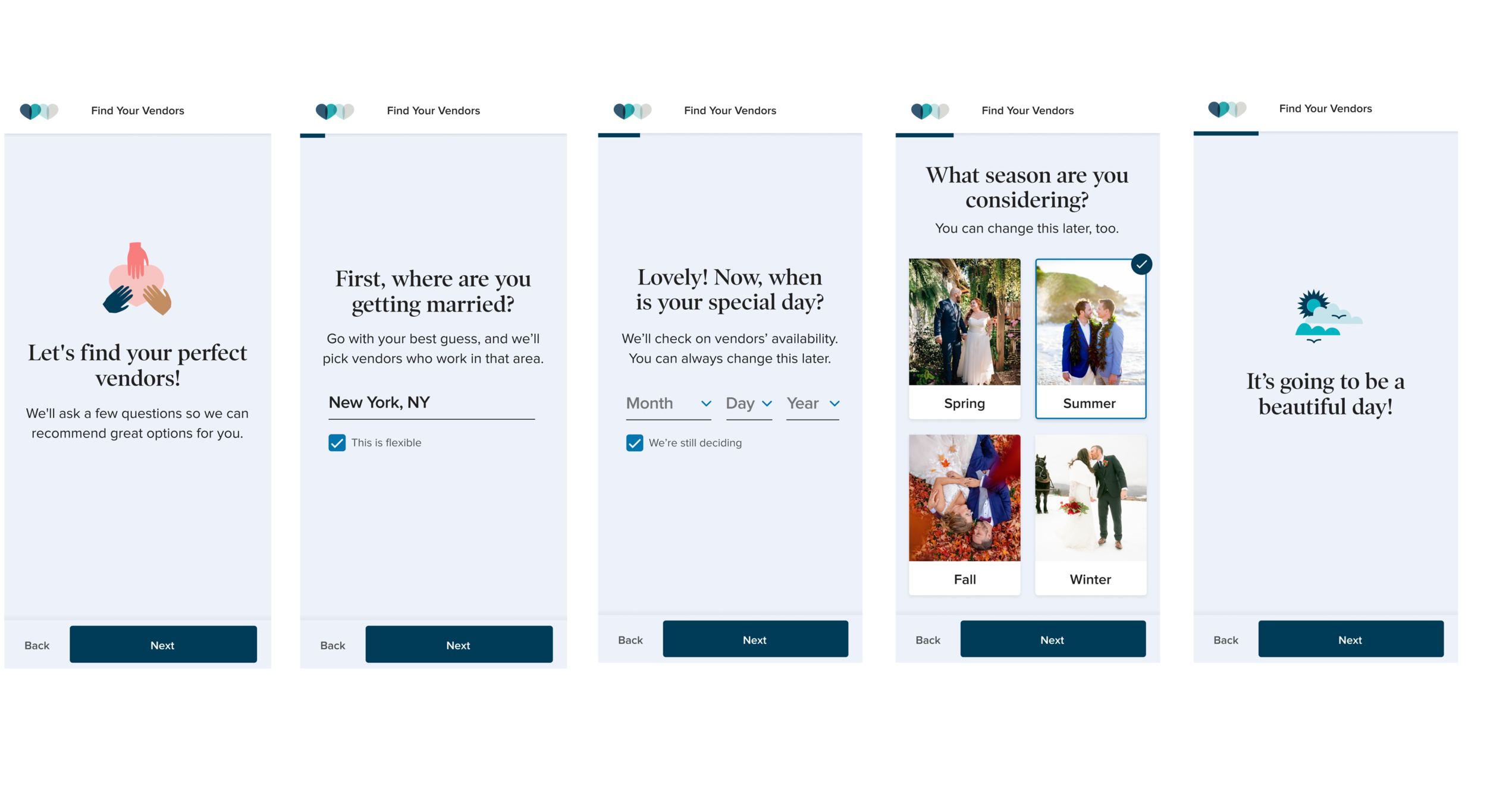
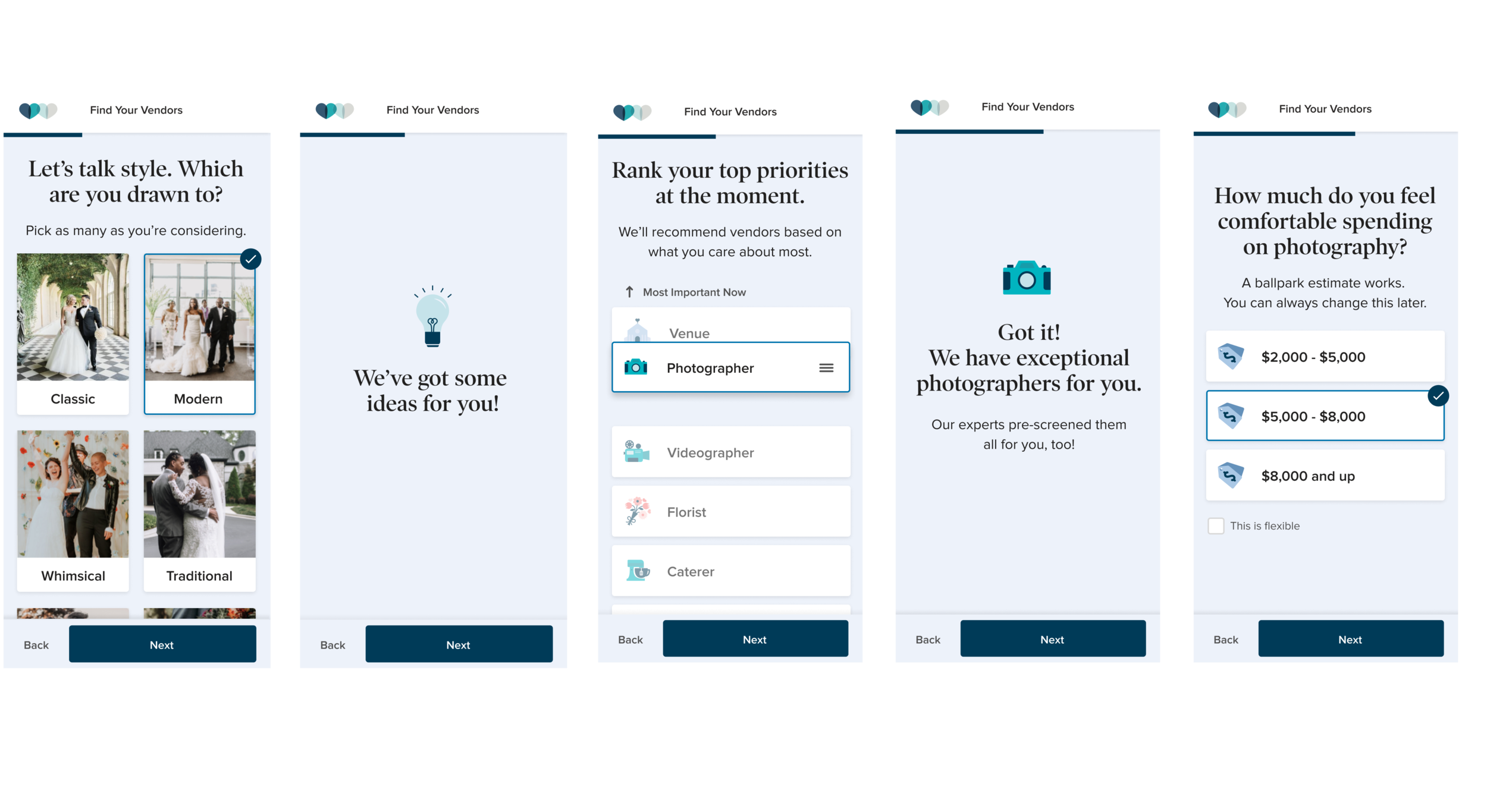
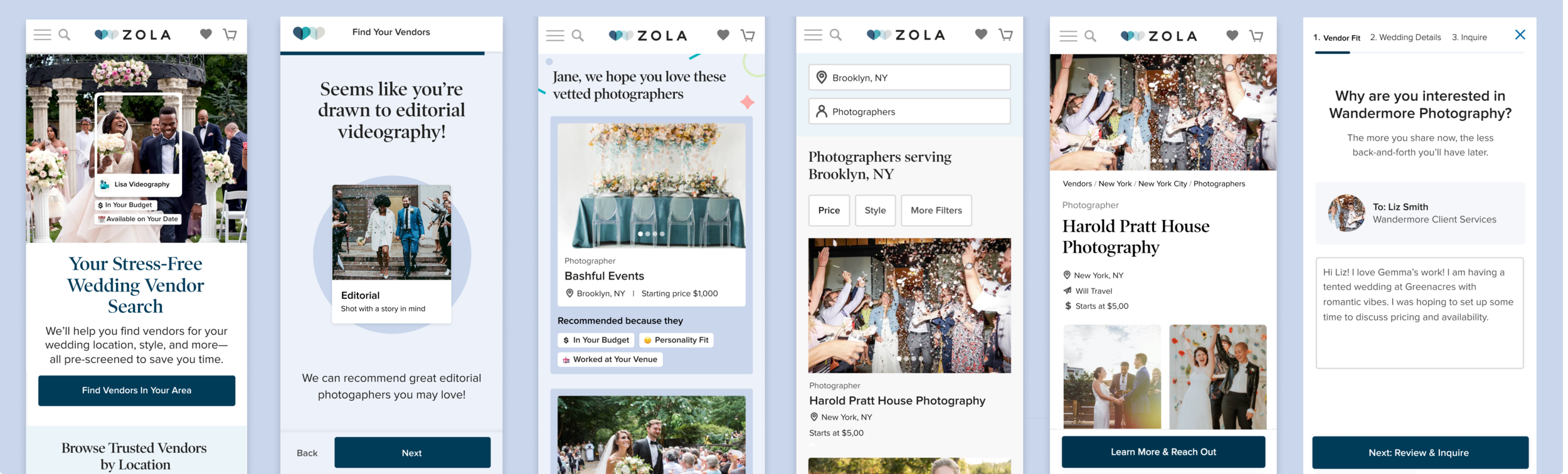
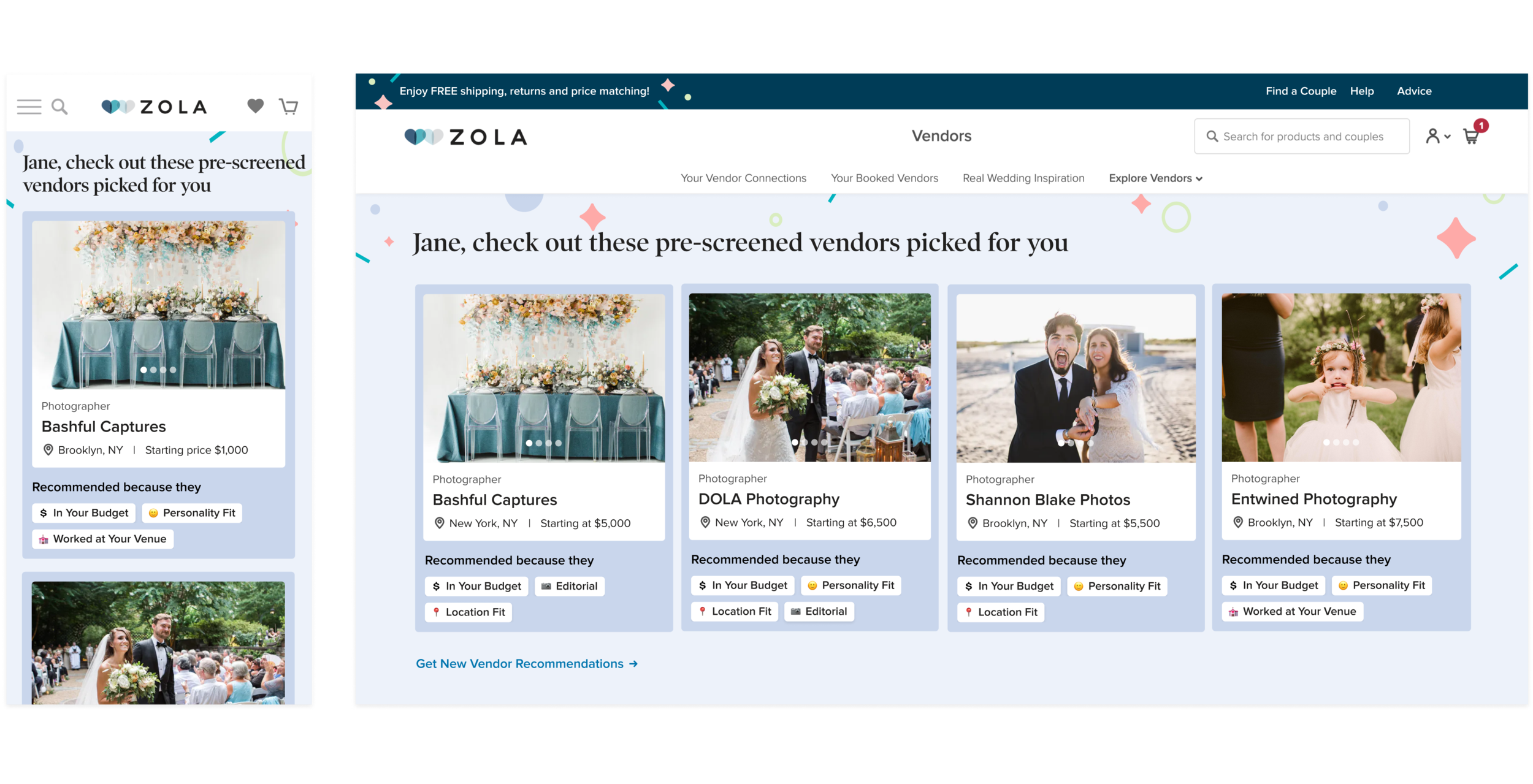
For supplied market couples, they can jumpstart their vendor search with personalized recommendations:
For unsupplied market couples, we surface nearby supplied markets and relevant content and cross-sells:
Early Results
29% of unsupplied Marketplace sign ups through Onboarding ended up becoming Paper & Invite users (a monetized product).
More to come in January 2021
Hypothesis 2:
Pushing couples to search and filter on their own will increase conversion.
Early data and funnel analysis showed that couples on a location-scoped search results page are 2.5x more likely to scroll the entire page. However, we had critical constraints before ~50% of markets were live:
The majority of location searches would lead to zero results
The majority of category searches would lead to zero results once filtered by location
But rapid-city expansion required location-scoping iterations before search could be implemented:
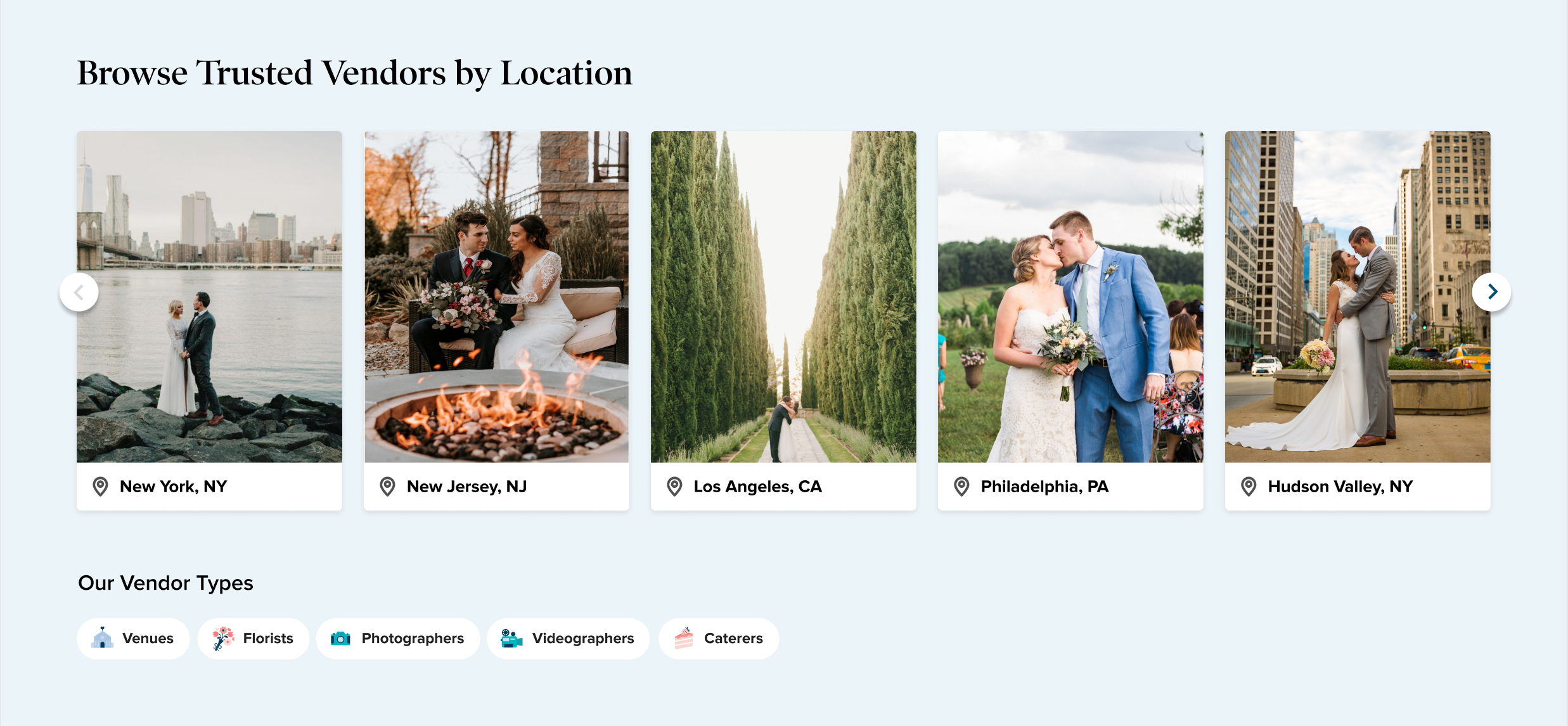
V1: Merchandise supplied locations once we had 12 live markets
High engagement with the location carousel arrows post-release indicated couples are actively searching for their location. Couples were also trying to search for locations and vendors in the global search bar, which at the time, which could not include vendor search. We also had to de-emphasize vendor categories, as that path would also lead to dead ends.
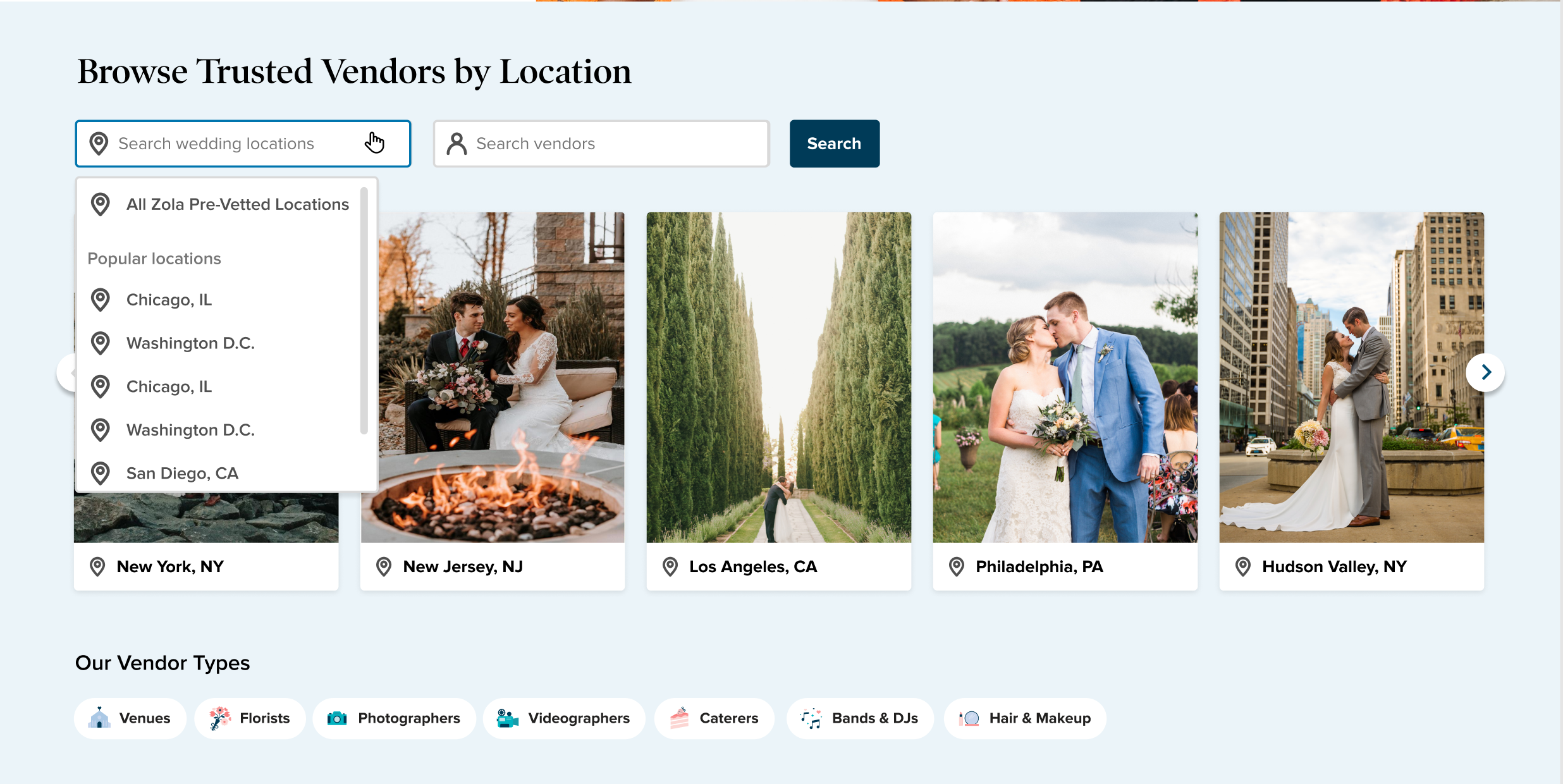
V2: Release Vendor Marketplace search
Once our marketplace reached nearly ~50% national coverage, we released and test the MVP search functionality for our product.
Data showed us that couples are primarily performing the below query types, which we are prioritizing increasing exposure to:
Wedding Location (ex: Cincinnati, OH)
Vendor Name (ex: Brooklyn Winery)
Vendor Category (ex: Caterers)
Vendor Category + Wedding Location (ex: Atlanta Florists).
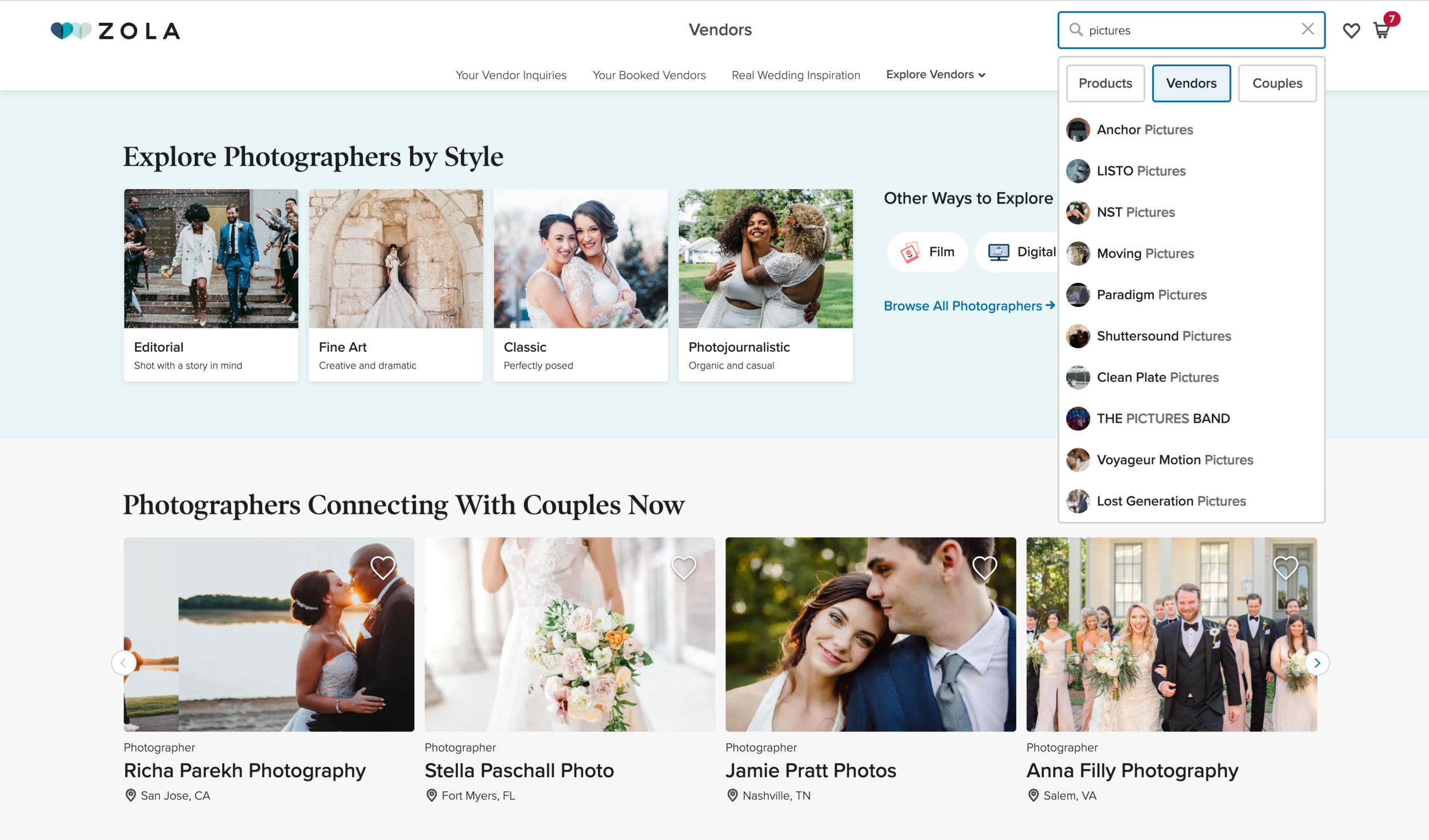
V3: Release Vendors in the Universal Search with an A/B Test
75% of the users using universal search from a Vendor Marketplace page are searching for a vendor-specific keyword.
We are running A/B tests through January 2021 to ensure we are doing no harm to existing search behavior before rolling out to 100% of couples traffic. We are running the results of the A/B test through the following KPIs to measure impact:
% change in traffic to Registry/E-Comm search results (PLP) from universal search
% change in traffic to Couples registries from universal search
% of VM traffic that originates from universal search
% change in total users using universal search
V4: Post-MVP single typeahead search bar
Our end goal is to have single typeahead search bar instead of two fields for location and vendor category.
A/B Test: Search vs. Onboarding
Once ~50% of markets were supplied in Q4, we could launch the A/B test of the Marketplace landing page hero, to see if we could see better conversion via onboarding or search.
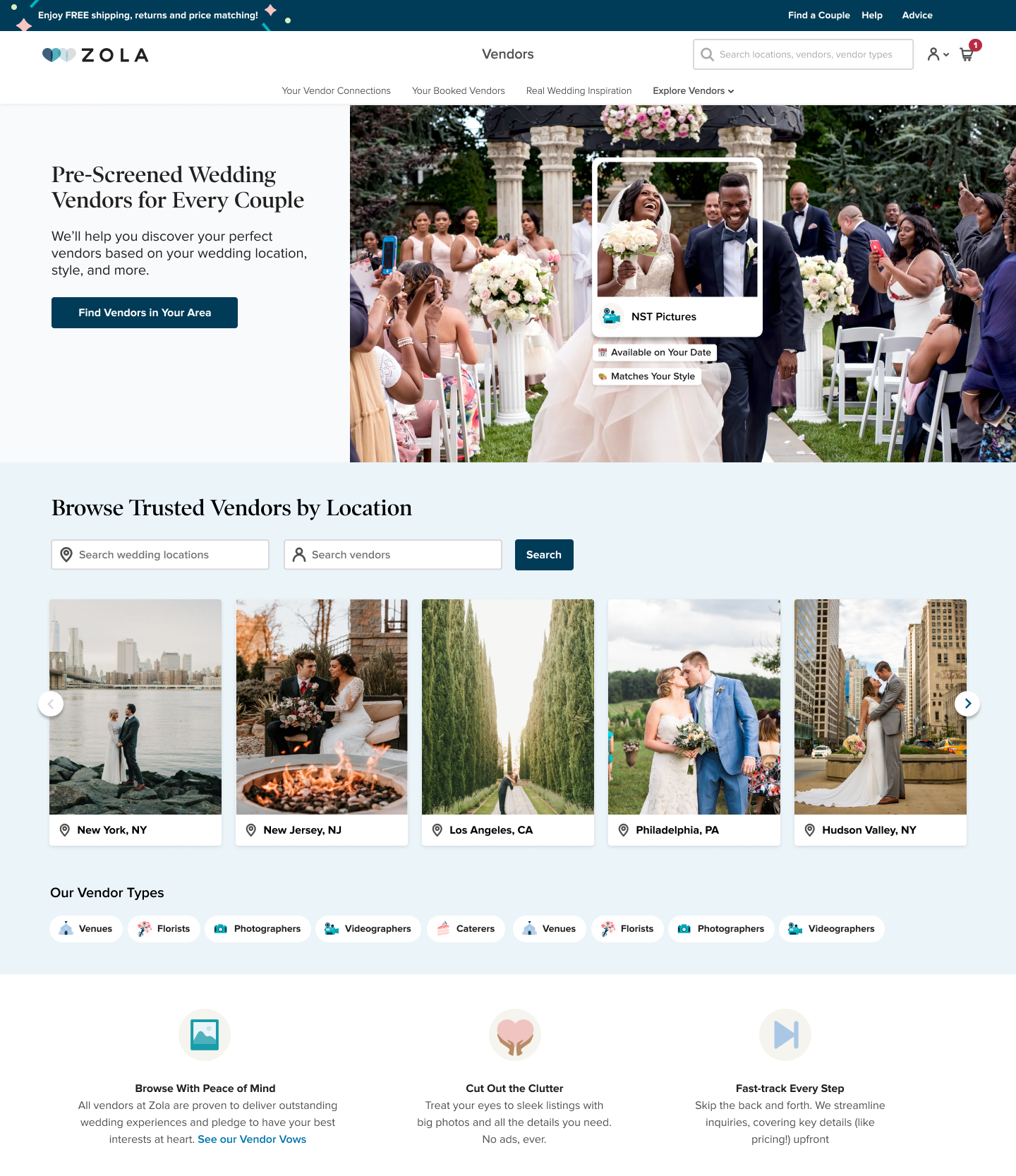
Onboarding Test
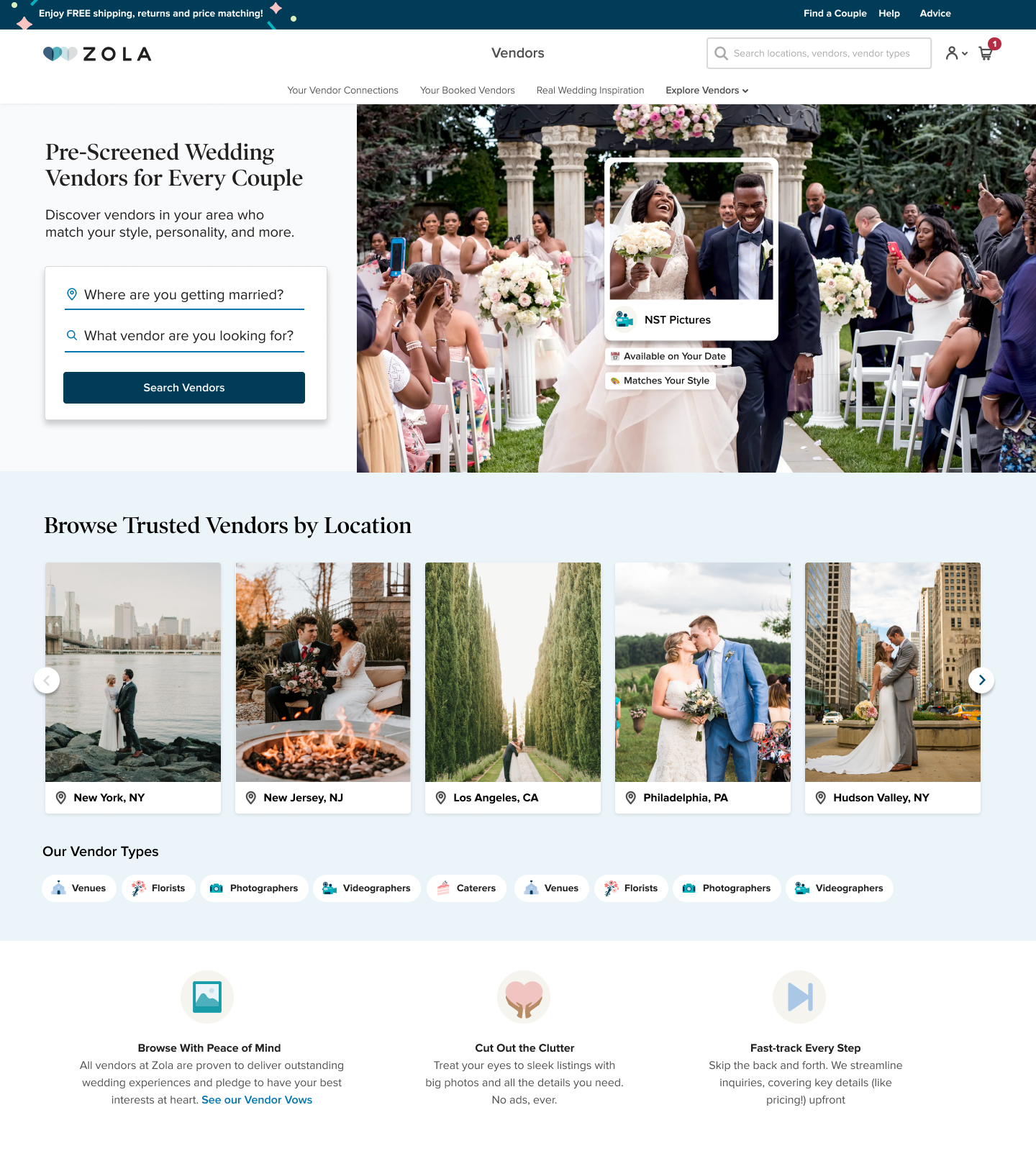
Search Test
A/B Test Results
Latest results coming late January 2021 (so far the Search Test is in the lead!)